Lgr22, Montessori, and Academic Excellence: What It Means for Your Child
As a parent, it’s natural to want the best of both worlds for your child: a school environment where they feel motivated and supported, and one where they are challenged to achieve strong academic results.
In Sweden, the national curriculum Lgr22, developed by the Swedish National Agency for Education, is designed to do exactly that. While it shares many similarities with the philosophy of Maria Montessori, it is important to be clear: this is a holistic and child-centered approach, but it is also firmly academic. At Swedish International School of Geneva (SISOG) in Meyrin, this balance is central.
Combining Rigorous Standards with Child-Centered Learning
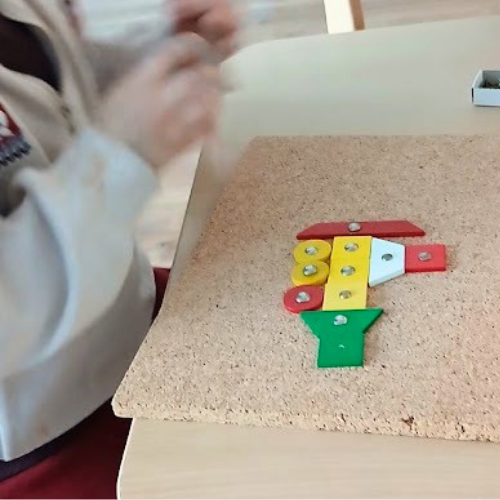
The approach combines the structure and academic expectations of Lgr22 with teaching practices that support independence, engagement, and deeper understanding. Lgr22 sets clear expectations for what students should know and be able to do at each stage of their education.
Measurable Outcomes: Students are guided toward specific goals in reading, writing, mathematics, sciences, humanities, and languages.
Critical Thinking: Students are expected to analyze, reflect, and solve problems while progress is continuously assessed against national standards.
Structured Rigor: While classrooms are dynamic, the academic goals remain clearly defined and rigorous.
Why Active Engagement Leads to Deeper Understanding
A child-centered approach does not mean less structure; it means more effective learning. Both Lgr22 and Montessori-inspired teaching recognize that students learn best when they are actively engaged and challenged at the right level.
In mathematics, students build conceptual understanding step-by-step rather than relying on memorization. In languages, they develop analytical skills, and in science, they investigate and apply knowledge rather than simply learning facts. This depth of learning strengthens long-term academic success.
High Expectations Through Individualized Support
At the same time, expectations remain high for every student. Individualization is a key principle at SISOG, but it does not lower standards. Instead, it ensures each child is supported to reach ambitious goals by mastering each step before moving forward.
Teachers play an active role in monitoring progress and stepping in to keep students on track. In practice, this creates classrooms that are:
Structured and Responsive: Lesson objectives are linked directly to curriculum goals.
Collaborative: Students work independently or in small groups with targeted teacher feedback.
Accountable: Students take responsibility for their learning within a well-defined academic framework.
Preparing Students for Future Academic Success
The goal is not only success in school, but preparation for the future. At SISOG, students develop strong subject knowledge alongside essential life skills like independence, responsibility, and critical thinking.
Within Lgr22, there is no trade-off between well-being and academic achievement. Your child is not choosing between feeling supported and being challenged—they are experiencing both.
Ultimately, this combination offers a powerful balance of structure and rigor alongside engagement and motivation. For parents, this provides confidence that your child is part of a system that is both nurturing and results-driven, aligned with the standards of the Swiss education system for smooth local or international transitions.